The best-known case for gay love in ancient Egypt is a tomb at Saqqara shared by two men, Niankhkhnum and Khnumhotep, royal manicurists of the Fifth Dynasty, around 2400 BC, who are carved embracing with their noses touching. Whether they were a couple, brothers or twins is still argued. The 1970s and 80s gay magazines knew the tomb, doubted half the theories, and then spent most of their Egypt pages on something more reliable: Hollywood.
Who were Niankhkhnum and Khnumhotep?
They were palace officials whose titles include overseer of manicurists in the palace, the men who kept the king's fingernails. Their tomb was found in 1964 by the Egyptologist Ahmed Moussa, during the excavation of the causeway of King Unas's pyramid at Saqqara, and its style dates it to the late Fifth Dynasty, under Nyuserre or Menkauhor. Even their names pair up: both honor the creator god Khnum, Niankhkhnum meaning "life belongs to Khnum" and Khnumhotep "Khnum is satisfied."
What makes the tomb famous is the pictures. It is the only tomb in the Saqqara necropolis in which two men are shown embracing and holding hands, and in its most striking relief they hold each other nose to nose, the most intimate pose canonical Egyptian art allowed. That pose was normally used for a husband and wife, and in many of the scenes Khnumhotep stands in the place usually given to the wife.
Were they a couple or brothers?
Nobody can prove either. Both men had wives and children: Khnumhotep's wife Khenut appears with their sons and a daughter in a fishing scene, and the men's children follow them on the walls. A 2016 study by the Egyptologists Linda Evans and Alexandra Woods argued that the many mirrored, paired images point to twins. Others read the same embraces as a romance, and Hyperallergic, revisiting the tomb in 2022, passed on the blog Making Queer History's objection: had a man and a woman shared it, nobody would have reached for twins first.
Mandate was skeptical in 1984 too. Its February travel feature, "Nights Along the Nile," reported that most Egyptologists accepted the pair as twin brothers, noted that the images of the wives had mostly been hacked away, and claimed the tomb was then boarded up and padlocked. It found the face-to-face embraces suspicious all the same, but quoted an openly gay American Egyptologist, unnamed, who dismissed the whole idea as speculation.
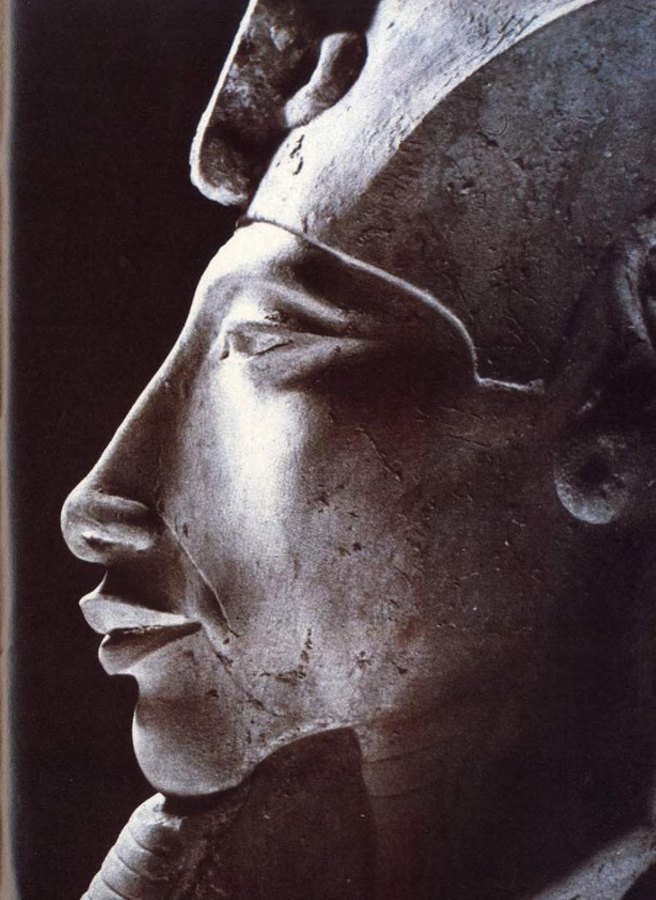
Were Akhenaten and Smenkhkare lovers?
That was the other story Mandate told, and it has aged worse. Akhenaten, the Eighteenth Dynasty king who swept away the old gods for the sun disc Aten and had himself carved with a long jaw, wide hips and a soft belly, ruled with a little-understood co-regent. Mandate described a plaque from Tell el-Amarna showing the king chucking a young co-ruler named Smenkhare under the chin, and noted that the novelist Allen Drury had taken the romance all the way in A God Against the Gods.
The theory took hold while Smenkhkare and the ruler called Neferneferuaten were still thought to be one male person. The best-known piece of evidence, a stela in Berlin showing two royal figures in an intimate pose, has three empty cartouches, enough for a king and a queen but not two kings, so the second figure is now generally read as a woman, perhaps Nefertiti ruling beside her husband. Mandate's own verdict on all its ancient evidence was a shrug: "Not much of a case, to be sure."
Why did gay magazines love Hollywood's Egypt?
Because Hollywood's Egypt was gay in every way the tomb could not be proven to be. In the same February 1984 issue, "The Reel Egyptians" ran a gallery of studio stills and argued that a generation of gay men had grown up on "the panoramic kitsch of ancient Egypt as seen through California eyes." It opened with Claudette Colbert in Cecil B. DeMille's Cleopatra (1934), which the caption called one of the earliest Hollywood films with an Egyptian theme, then ran through Richard Burton and Elizabeth Taylor in the 1963 Cleopatra, Edmund Purdom in The Egyptian (1954), Boris Karloff in The Mummy (1932), Peter Ustinov in Death on the Nile (1978) and Roger Moore in The Spy Who Loved Me (1977).
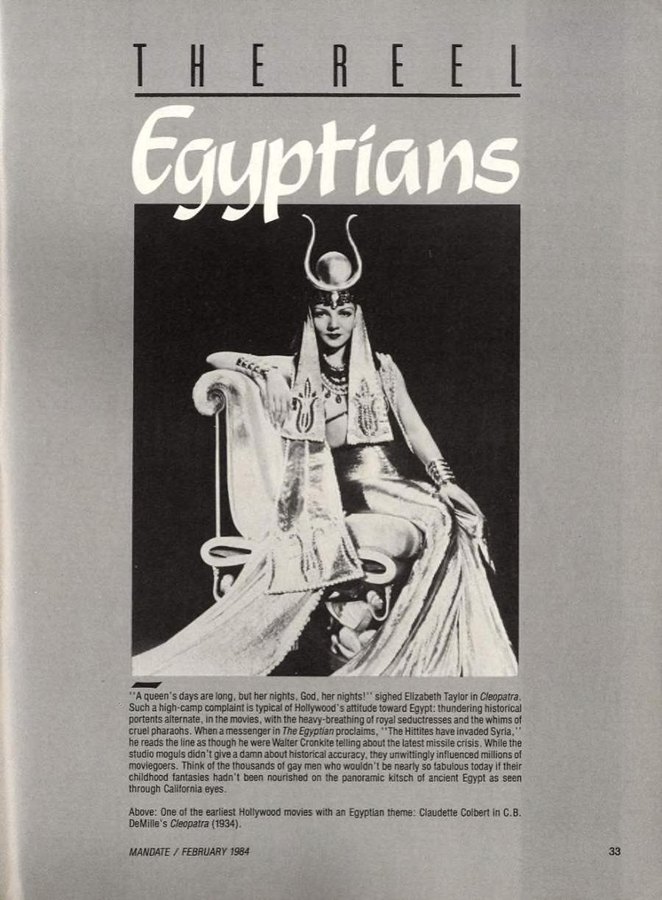
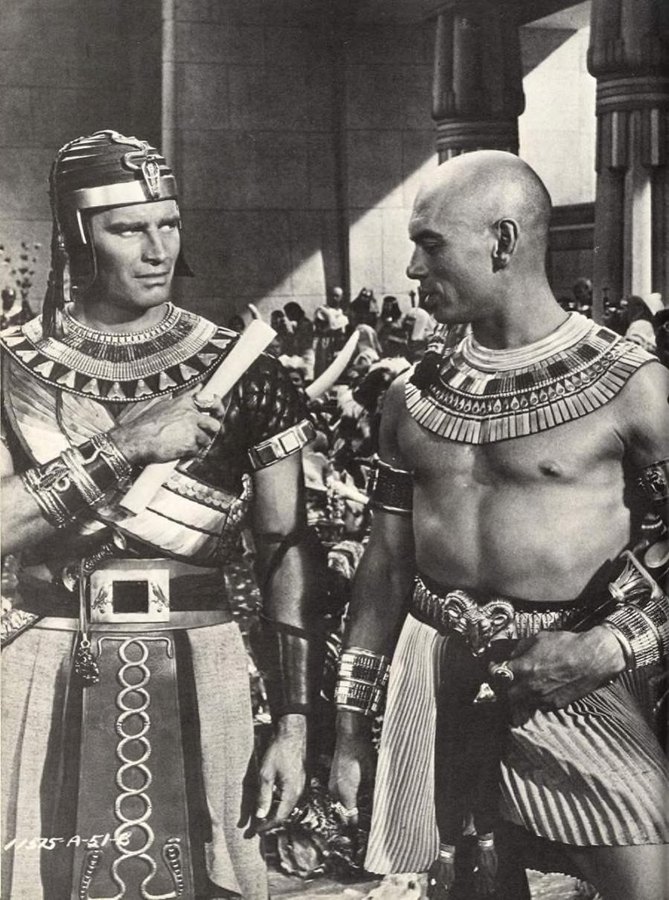
Colbert's Cleopatra premiered in New York on August 16, 1934, six weeks after the Production Code began to be strictly enforced on July 1, and DeMille still got away with an opening shot of an apparently naked, strategically lit maidservant holding two incense burners. It won Victor Milner the Oscar for cinematography. Twenty-two years later DeMille went back to the Nile for The Ten Commandments (1956), a 220-minute VistaVision epic with Charlton Heston as Moses and Yul Brynner, shaved head and bare chest, as the pharaoh Rameses. It took about $122.7 million on first release and has aired on network television around Passover and Easter since 1973.
When did the gay magazines go to Egypt?
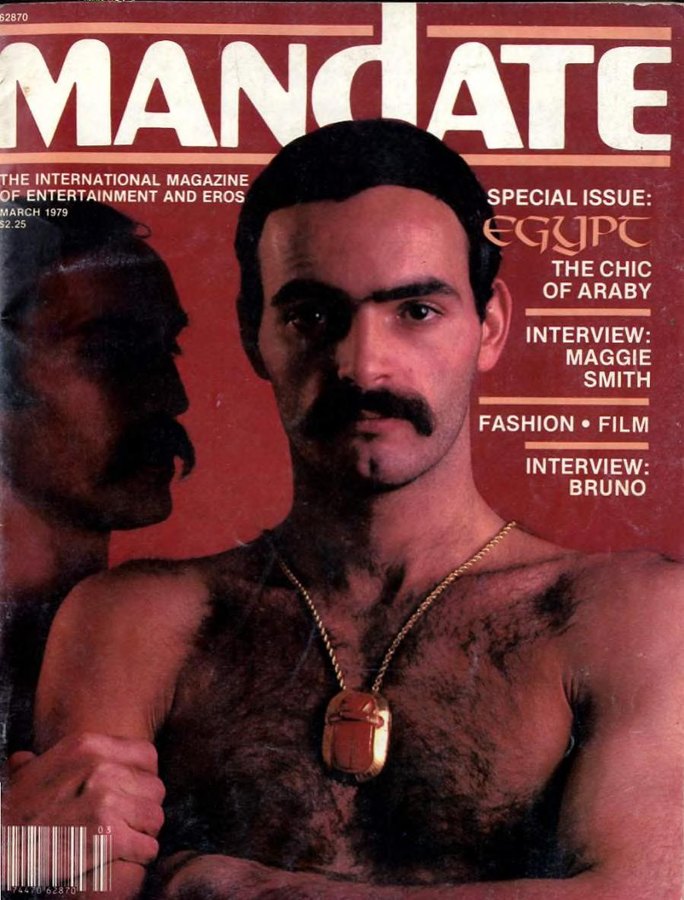
March 1979, mostly. Mandate's cover that month told readers to forget touring "Tut-mania" and go to Egypt itself, and promised a 30-page exclusive on "the chic of Araby," from Cairo to Luxor and Abu Simbel. Roy Blakey shot the cover man in a copper and enamel scarab pendant; John Devere, the magazine's executive editor and art director, wrote the feature, and Jurgen Vollmer photographed it. A caption inside put Yul Brynner and Anne Baxter, DeMille's Rameses and Nefretiri, beside the real colossus at Luxor.
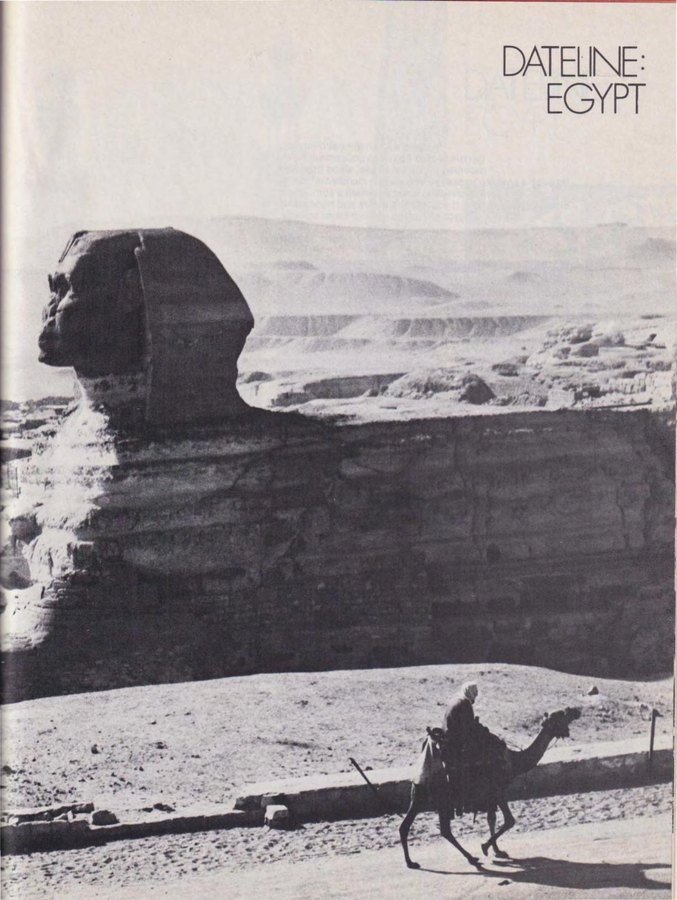
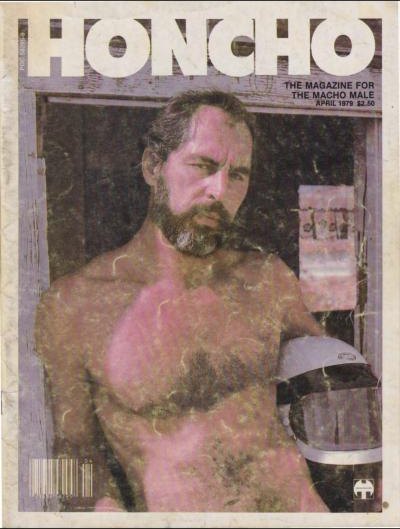
Two months later its sister magazine Honcho, also published by George Mavety with Devere as executive editor, sent a camel caravan of editor, photographer, models and drivers past the pyramids for a fashion story called "Caravans," with Vollmer behind the camera again. "We could swear we saw that Sphinx wink," the caption said.
Could you actually go?
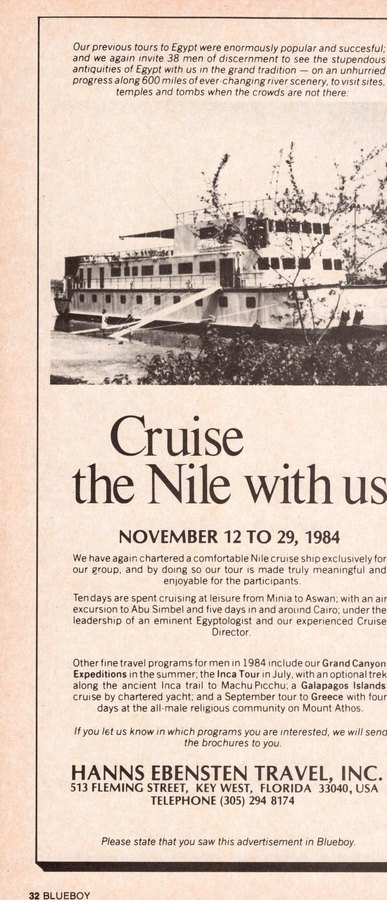
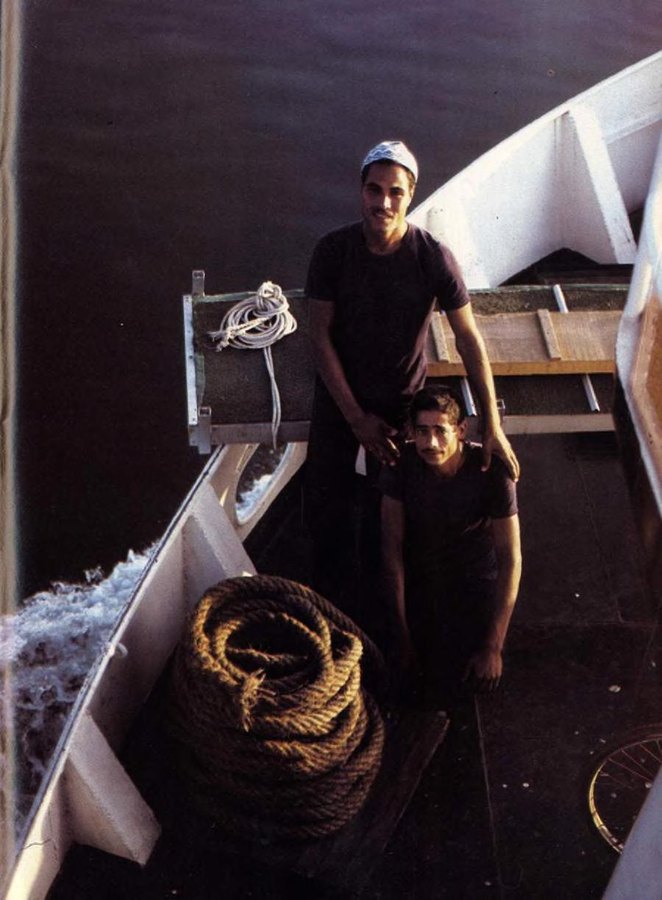
Yes, in a group. Hanns Ebensten Travel of Key West advertised a Nile cruise for November 12 to 29, 1984, in Blueboy that September: a ship chartered for the group alone, ten days cruising the river to Aswan, a flight to Abu Simbel and five days around Cairo, led by an Egyptologist. Mandate's own feature that year closed its pictures on the crew.
Quick answers
Who were Niankhkhnum and Khnumhotep? Two Fifth Dynasty palace officials, overseers of the king's manicurists around 2400 BC, buried together at Saqqara in a tomb found in 1964, where they are carved embracing nose to nose.
Were Niankhkhnum and Khnumhotep a gay couple? It is not known. The embrace was a pose normally used for married couples, which supports a romantic reading; both men also had wives and children, and some Egyptologists argue they were brothers or twins.
Were Akhenaten and Smenkhkare lovers? That idea came from images of Akhenaten with a second royal figure, read when Smenkhkare and Neferneferuaten were thought to be one man. The Berlin stela has cartouches for a king and a queen, and the second figure is now generally read as a woman.
Which vintage gay magazines covered Egypt? Mandate (March 1979 Egypt issue; February 1984 "Nights Along the Nile" and "The Reel Egyptians") and Honcho (May 1979 "Caravans" and "Dateline: Egypt"), plus Hanns Ebensten's Nile cruise ads in Blueboy.