Vintage gay 1950s magazine
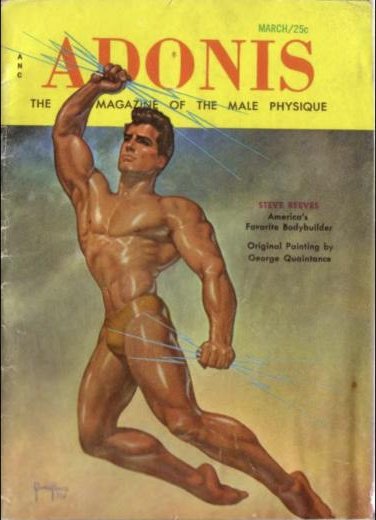
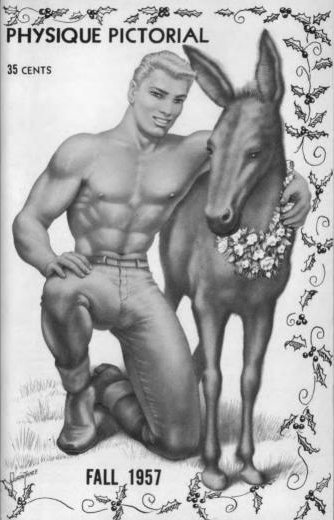
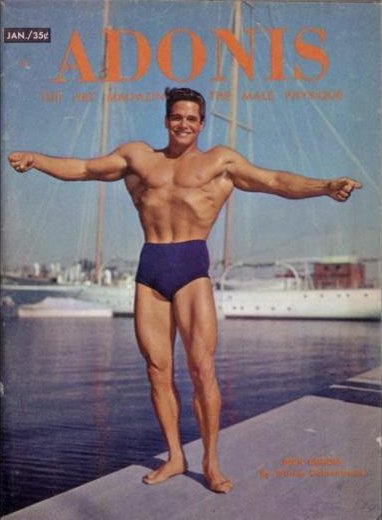
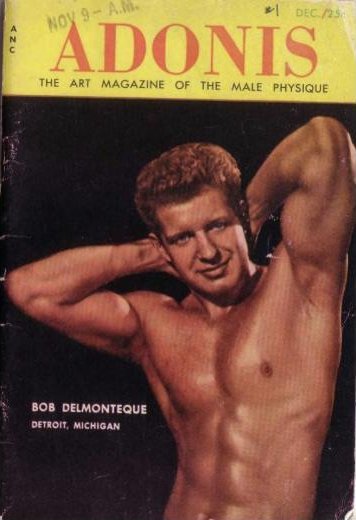
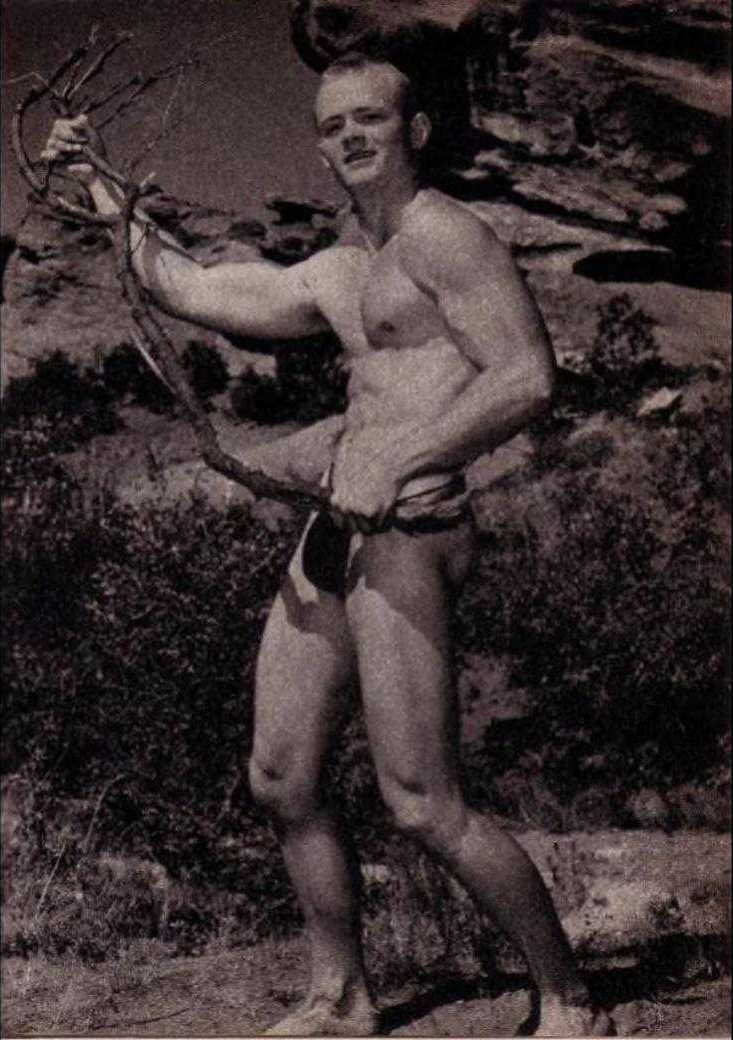
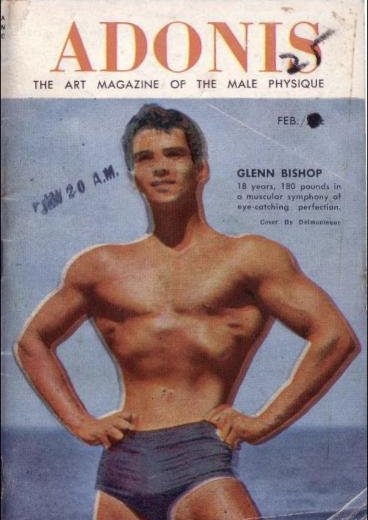
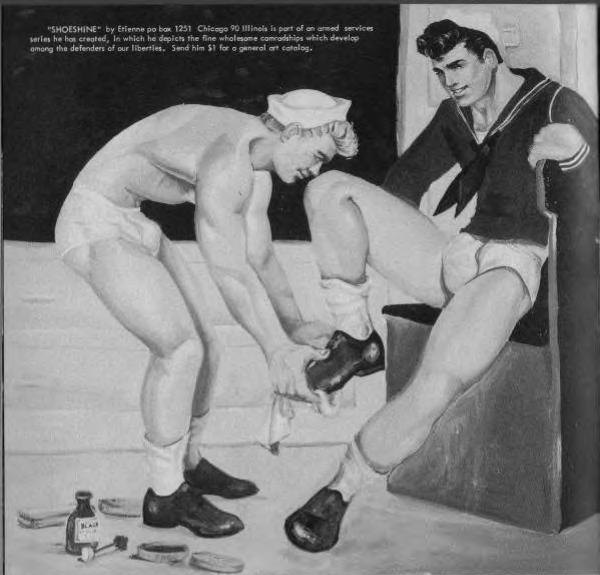
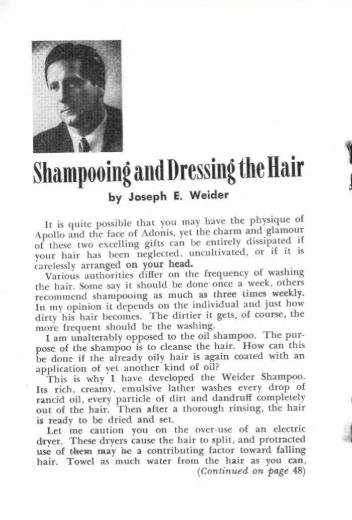
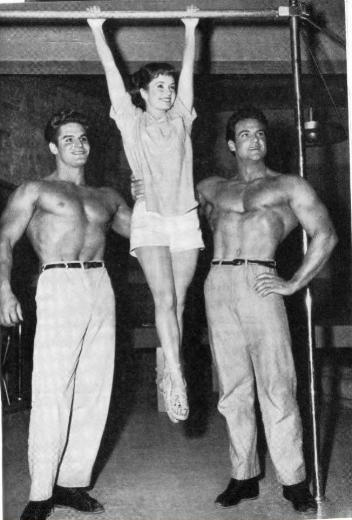
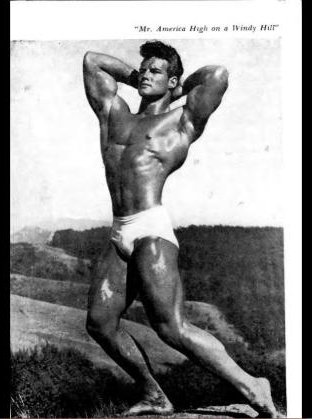
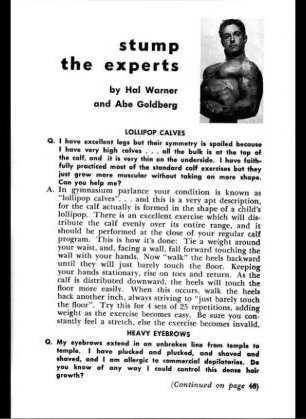
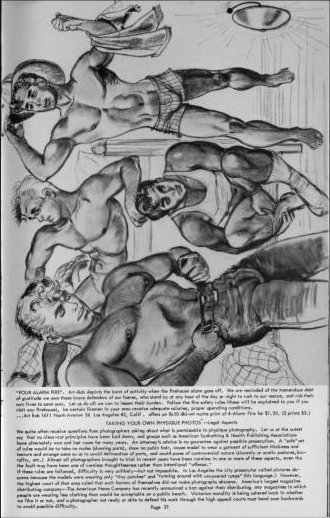
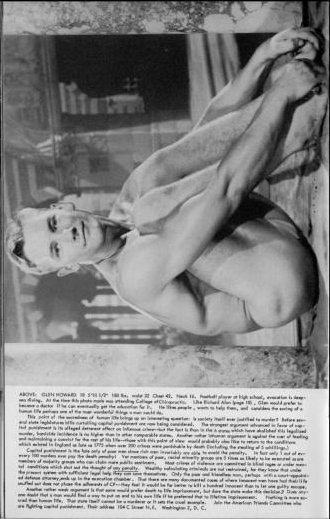
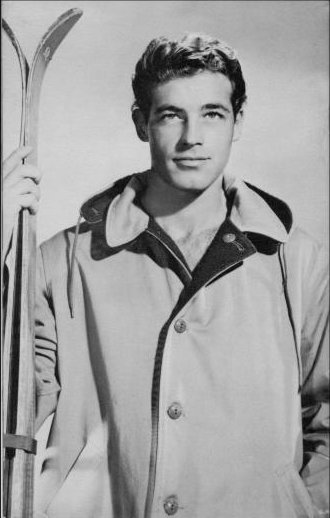
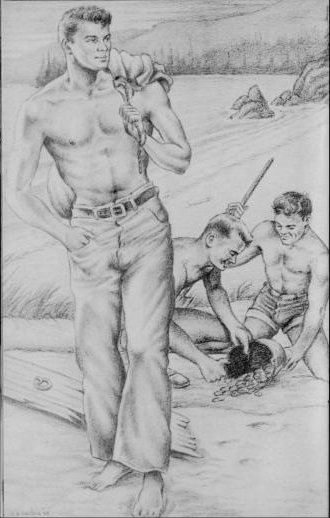
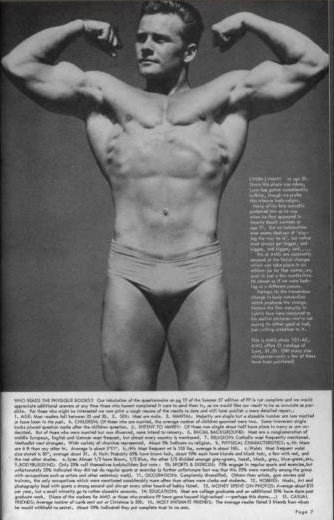
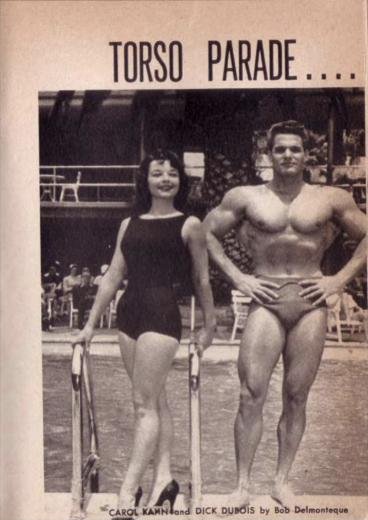
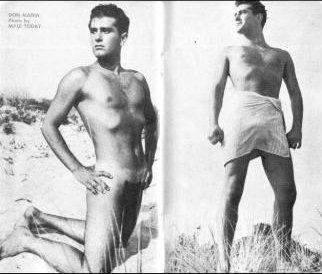
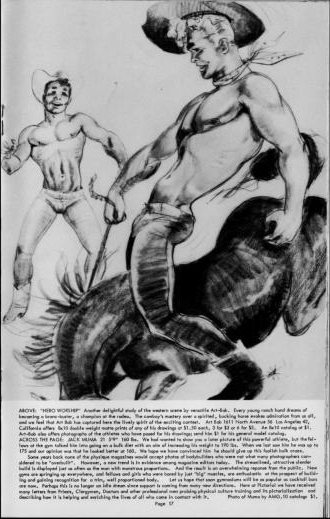
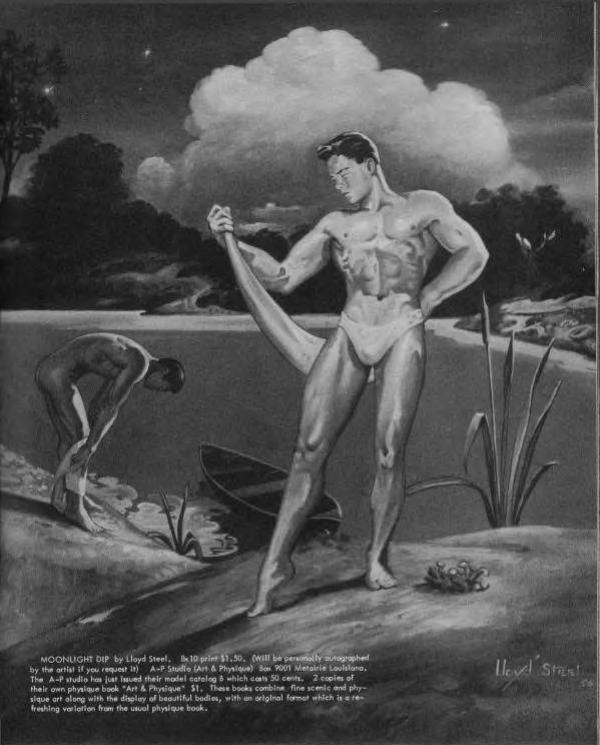
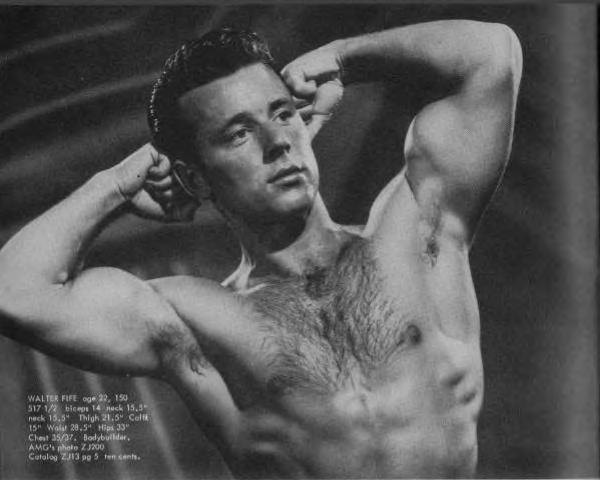
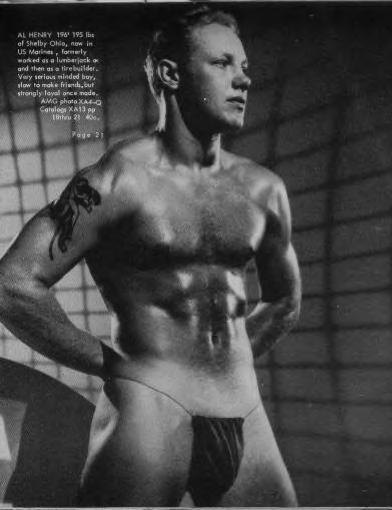
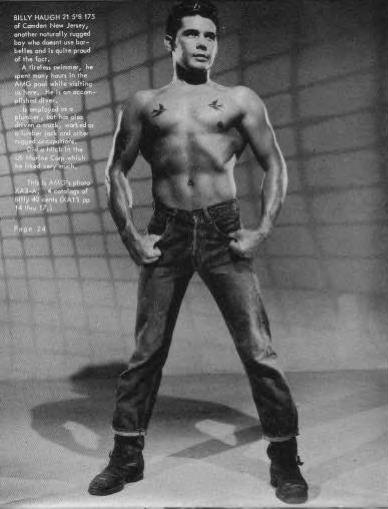
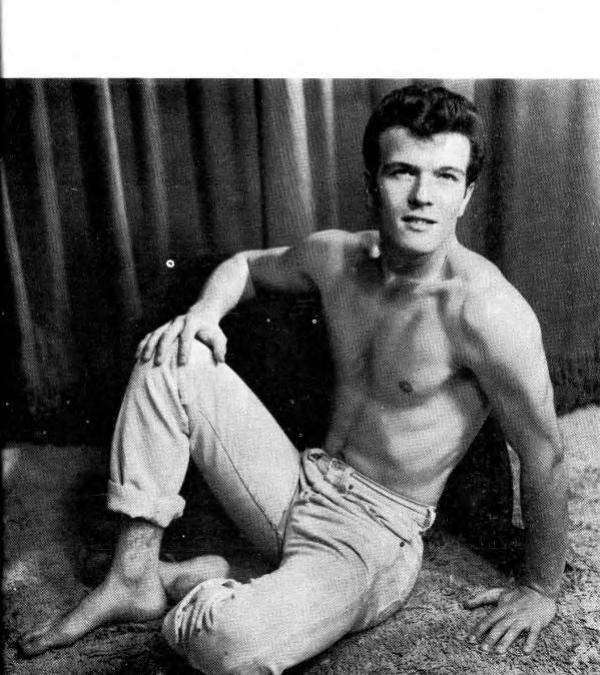
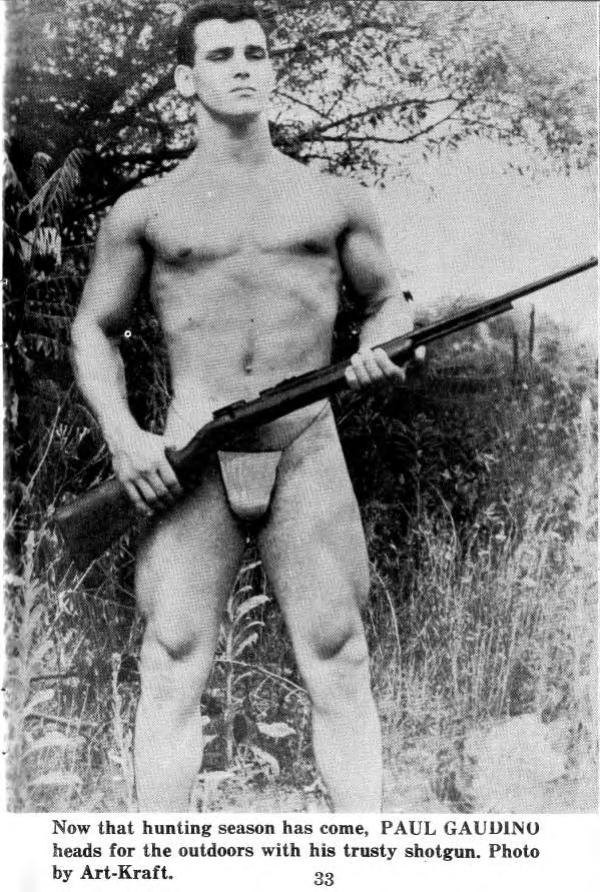
1950s gay-interest magazines were physique magazines: digests of muscular men in posing straps, sold as fitness or art reference and bought mostly by gay men through the mail and on big-city newsstands. Bob Mizer's Physique Pictorial began in Los Angeles in 1951; Joe Weider's Adonis launched in December 1954 as 'the art magazine of the male physique'; Grecian Guild Pictorial followed in autumn 1955 and Fizeek by 1959. Our plates show the range: Adonis covers and grooming advice, contest champions posed on windy hills, George Quaintance's painted Steve Reeves (1957), Etienne's 'Shoeshine', Athletic Model Guild photos with typed stats and Physique Pictorial's own 1957 reader questionnaire. At their peak these titles outsold the homophile press almost ten to one, while the Post Office prosecuted many of their makers.
Physique magazines were 1950s and 1960s publications of muscular men in minimal clothing, sold as fitness or art reference but made largely by and for gay men; the "physique era" ran roughly from 1951 to 1967.
Physique magazines published photographs of muscular men in athletic poses, usually wearing a posing strap, swim briefs or a towel. They presented themselves as fitness, health or art reference, but were produced mainly by and for gay men. The historian David K. Johnson dates the "physique era" from 1951 to 1967, and one 1960s estimate put annual U.S. circulation at nine million.
- Era
- About 1951-1967
- Typical dress
- Posing strap, swim briefs, towel
- Key titles
- Physique Pictorial (1951), Tomorrow's Man (1952), Grecian Guild Pictorial (1955), Drum (1964)
- Circulation
- Estimated nine million a year in the U.S. (1960s)
- Peak
- More than 100 muscle magazines; physique titles outsold homophile magazines almost ten to one
- Post office enforcement
- 4,979 arrests and 4,095 convictions for obscene mail, 1961-1968

Quick answers
What gay magazines existed in the 1950s? Mainly physique magazines such as Physique Pictorial (1951), Tomorrow's Man (1952), Adonis (1954) and Grecian Guild Pictorial (1955), plus homophile journals such as ONE (from 1953).
Were 1950s physique magazines legal? They were sold openly as fitness or art magazines, but publishers and photographers were often prosecuted under postal obscenity law until MANual Enterprises v. Day (1962) ruled such magazines were not obscene.
How were physique magazines sold? By mail-order subscription and on newsstands in some large cities, often alongside mail-order photo sets and catalogs.